
We carry out ventilation flow rate testing and commissioning measurements for developers, housebuilders, contractors and construction professionals, checking that installed ventilation systems are delivering the airflow required by the design and Building Regulations.
From individual new homes and apartments to larger residential developments, our team provides accurate on-site measurements, straightforward reporting and the compliance documentation you need at completion.
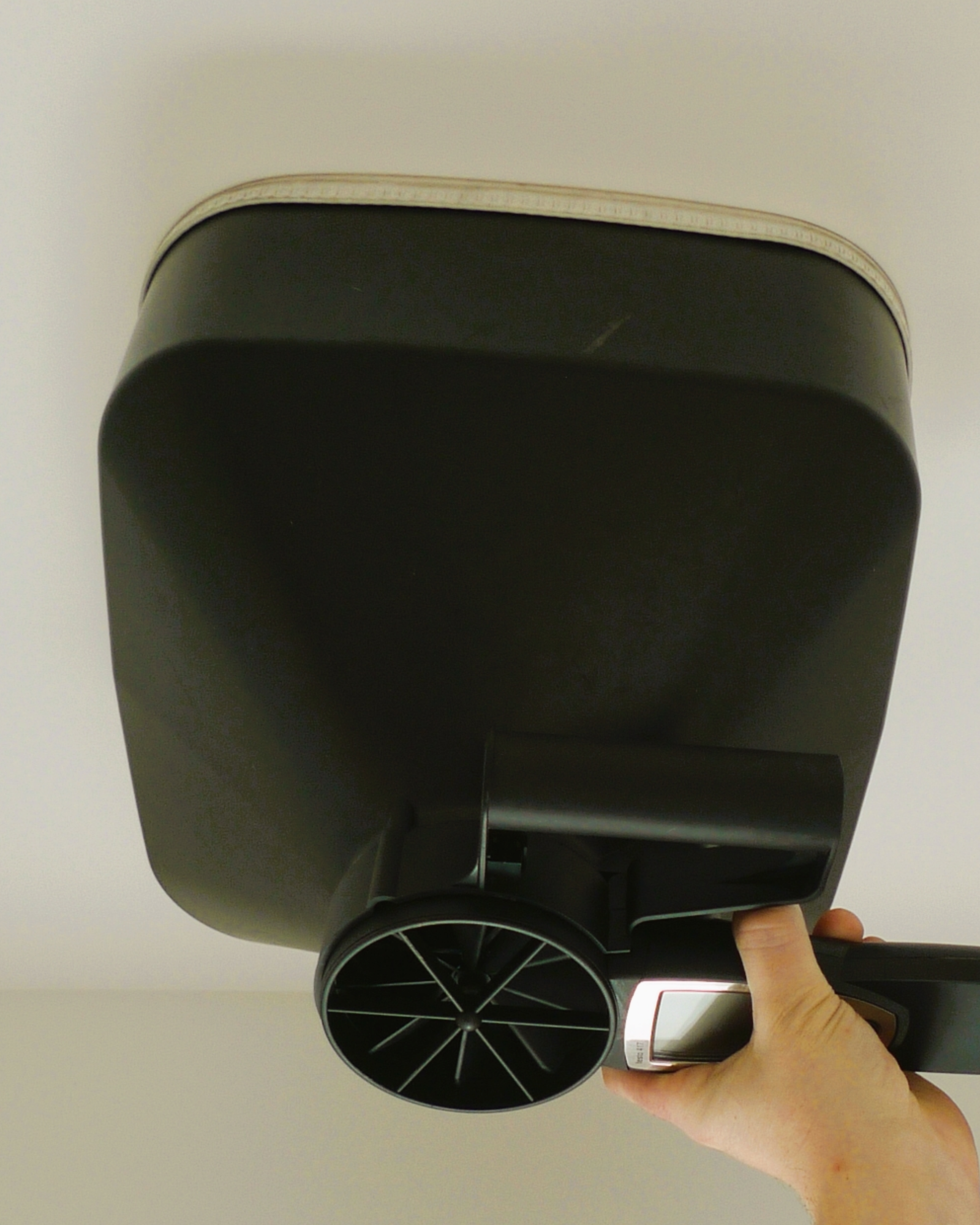
Ventilation Flow Rate Testing measures the amount of air moving through the ventilation system at individual supply and extract terminals.
Testing can be used to measure airflow rates at ventilation terminals, check that supply and extract systems are delivering the required airflow, identify issues with ventilation performance before completion, provide measurements needed for ventilation commissioning and compliance documentation, and support Building Control and project records where testing is required.
Testing methods and requirements depend on the type of ventilation system installed, such as continuous mechanical extract ventilation (MEV), mechanical ventilation with heat recovery (MVHR) and other mechanical ventilation systems.
A ventilation system needs to provide adequate airflow to help maintain indoor air quality and occupant health, while operating as intended.
Testing helps you:
• Demonstrate compliance with Part F where testing and commissioning are required.
• Confirm that ventilation systems are delivering the required airflow rates.
• Identify installation or commissioning problems before handover.
• Reduce the risk of remedial work and delays at completion.
• Provide clear evidence of the system’s measured performance.
For developers and contractors, testing provides an important check that the installed system matches the intended design and performance requirements.
We work with architects, developers, contractors, housebuilders and construction professionals, providing design and build compliance services across residential and commercial projects.
From SAP Calculations and SBEM Assessments to air pressure testing, acoustic testing, ventilation and thermal performance assessments, we provide the technical compliance services your project needs at different stages of design and construction.
With one company and one point of contact, we make it easier to manage multiple compliance requirements from design through to completion, helping your project stay on track and meet applicable Building Regulations.
Our Ventilation Flow Rate Testing is primarily associated with:
• Building Regulations 2010 – Part F: Ventilation
• Approved Document F, Volume 1: Dwellings
• Relevant ventilation commissioning and testing guidance.
• Applicable standards for the type of ventilation system installed.
For residential projects in England, the exact testing and commissioning requirements depend on the type of dwelling and ventilation system. Requirements can differ across England, Wales, Scotland and Northern Ireland.

Whether you require a Ventilation Flow Rate Testing (Part F) on its own or alongside other compliance services, we’ll help coordinate the process through one trusted provider, making property compliance simpler to manage.
Our competent surveyors carry out Ventilation Flow Rate Testing (Part F) across a wide range of commercial and residential properties, ensuring each survey is appropriate for the building and its intended use.
Based in Manchester with a particular focus on Greater Manchester and the wider North West. But our team supports clients across the UK, so wherever your properties are located, we’re ready to help.
Our compliance reports are written in plain English, with clear findings, practical recommendations and documentation that’s ready to use. No unnecessary jargon, just reports that help you act quickly and stay compliant.
From your first enquiry to your final report and beyond, we’re committed to clear communication, prompt responses and proactive recommendations and reminders to help you stay compliant without the stress.
We coordinate your compliance services in one place, reducing administration, saving time and making property compliance easier to manage, so you can focus on supporting your residents.
Working with the Compliance Company is always great, they produce their work in a timely and professional manner.
Communication is always top notch too, which is really appreciated. They are our go to consultants for anything Part L or SBEM related.

Very happy with their prompt noise survey and report. All done smoothly and within the timescales communicated during quotation. Highly recommended!
Ryan was exceedingly helpful. A wealth of guidance, advice, and wisdom. Very personable, professional, and honest. He answered all my questions promptly and thoroughly.
It’s very refreshing when you don’t have to chase people! Really cannot recommend Ryan enough. He and his business are top-notch
We provide Ventilation Flow Rate Testing (Part F) across the UK, supporting commercial property owners, landlords, housing providers, managing agents, contractors and organisations responsible for maintaining safe, compliant buildings.
Our surveyors regularly work across:
• Greater Manchester (Manchester, Salford, Bolton, Stockport, Oldham, Rochdale, Bury, Tameside, Trafford, Wigan)
• Merseyside (Liverpool, Wirral, St Helens, Southport, Knowsley, Sefton)
• Cheshire (Chester, Warrington, Crewe, Macclesfield, Northwich, Ellesmere Port, Wilmslow)
• Lancashire (Preston, Blackburn, Blackpool, Burnley, Accrington, Rossendale, Chorley, Lancaster)
• West Yorkshire (Leeds, Bradford, Wakefield, Huddersfield, Halifax, Dewsbury, Batley)
• South Yorkshire (Sheffield, Doncaster, Rotherham, Barnsley)
• North Yorkshire (York, Harrogate, Scarborough, Ripon, Selby, Skipton)
• East Midlands (Derby, Nottingham, Leicester, Derbyshire, Nottinghamshire, Leicestershire)
• Staffordshire (Stoke-on-Trent, Stafford, Tamworth, Newcastle-under-Lyme, Burton upon Trent)
• West Midlands (Birmingham, Coventry, Wolverhampton, Solihull, Walsall, Dudley, Sandwell)
• North East (Newcastle, Sunderland, Gateshead, Middlesbrough, Darlington, Durham)
• East Anglia (Cambridge, Norwich, Ipswich, Peterborough)
• Greater London (Central, North, South, East, West London)
• Kent (Maidstone, Canterbury, Medway, Ashford, Dartford, Tunbridge Wells)
• Surrey (Guildford, Woking, Reigate, Epsom, Redhill)
• Essex (Chelmsford, Colchester, Basildon, Southend-on-Sea, Harlow)
• South Coast (Hampshire, Sussex, Portsmouth, Southampton, Brighton, Eastbourne)
• South West (Bristol, Devon, Cornwall, Somerset, Gloucestershire, Plymouth, Exeter, Bath, Gloucester, Cheltenham, Taunton)
• South Wales (Cardiff, Newport, Swansea, Bridgend, Merthyr Tydfil)
• Scotland (Glasgow, Edinburgh, Aberdeen, Dundee, Stirling, Perth)
For applicable new dwellings in England, ventilation systems must be commissioned and tested in accordance with the requirements of Part F. The exact requirements depend on the type of ventilation system and dwelling.
Testing should generally take place once the ventilation system has been installed and commissioned, with the building and system sufficiently complete for accurate measurements to be taken.
Testing should be planned into the construction programme rather than left until the final stages, particularly where remedial work could be required.
If you’re planning a new residential development, we can also support you with SAP Calculations and other design-stage compliance services before construction begins.
If measured airflow rates do not meet the relevant requirements, the system should be investigated and adjusted or remedial work carried out where necessary.
A retest may then be required to confirm that the required performance has been achieved.
Yes. We provide a range of Build Stage compliance services, including:
We can also support the earlier design stage with SAP Calculations, SBEM Assessments, Energy Statements and other design compliance services.
New homes need to demonstrate compliance with the energy efficiency requirements of Part L of the Building Regulations. SAP calculations assess the energy performance of a dwelling and help determine whether the proposed design meets the required standards.
We provide SAP calculations for new-build and conversion projects, assessing energy performance, carbon emissions and key building specifications, and provide the reports needed for Building Control and compliance.
Non-domestic buildings need to demonstrate compliance with the energy efficiency requirements of Part L of the Building Regulations. SBEM assesses the energy performance of buildings such as offices, retail units and commercial spaces against the required standards.
We provide SBEM assessments for new-build and commercial projects, modelling energy performance, carbon emissions and building specifications, and providing the reports needed for Building Control and compliance.
Overheating can affect comfort, health and the performance of new homes. Under Part O of the Building Regulations, new residential buildings must be designed to reduce the risk of overheating and provide adequate means of removing excess heat.
We carry out Part O overheating assessments using the Simplified Method or Dynamic Thermal Modelling, providing clear results and compliance documentation for your project.
Whether you’re managing a residential property, supported accommodation, office, school or commercial premises, an EPC provides an A–G energy efficiency rating and recommendations for improvement.
EPC requirements apply to many properties when they are constructed, sold or rented, with Minimum Energy Efficiency Standards (MEES) also applying to certain rented properties.
We carry out EPC assessments and provide the certification and information you need to understand your property’s energy performance and meet applicable requirements.
Energy performance needs to be considered early in the design process, particularly where planning requirements call for a clear strategy for reducing energy use and carbon emissions.
We prepare energy statements for residential and commercial developments, assessing energy demand, efficiency measures and low-carbon technologies to demonstrate how a project meets its energy and sustainability targets.
New homes need to demonstrate that their water use meets the requirements of Part G of the Building Regulations. Our water efficiency calculations assess the proposed fittings and appliances against the required litres-per-person-per-day target.
We calculate water consumption for new dwellings, helping you meet the required 125-litre or optional 110-litre standard and providing the documentation needed for Building Control.
Default thermal bridging values can be conservative, potentially leading to higher insulation requirements and unnecessary costs. Bespoke PSI values provide a more accurate picture of how heat moves through your building’s junctions and support compliance with Part L of the Building Regulations.
We calculate bespoke thermal bridging values for your project, helping improve SAP accuracy, optimise your specification and demonstrate compliance without over-specifying materials.
Air leakage can affect a building’s energy performance and its compliance with Part L of the Building Regulations. For new dwellings, air pressure testing is an important part of demonstrating that the required standards for air permeability have been met.
We carry out accurate air pressure tests, identify air leakage and provide the certification and reporting needed for building control.
Poor sound insulation can affect comfort, privacy and compliance in residential developments. Under Part E of the Building Regulations, buildings must provide appropriate resistance to the passage of sound.
We carry out airborne and impact sound testing to assess acoustic performance, identify issues and provide the test results and reporting needed for building control.
Compliance in supported housing is a different beast.
It has stricter frameworks, sector-specific requirements and a very different set of responsibilities.
We have a specialist division built entirely for it. Same one-stop-shop approach, built specifically for housing providers, care organisations and nominated individuals managing property compliance.