
Professional EPC Assessments for Your Property.
An Energy Performance Certificate (EPC) provides an assessment of a property’s energy efficiency, giving you a clear understanding of its current energy performance and recommendations for potential improvements.
We provide EPC assessments across residential properties, supported accommodation, offices, schools, retail and commercial premises, and wider property portfolios.
Whether you need an EPC for a single property or multiple buildings, our service provides clear certification and practical information to help you understand your property’s energy performance.
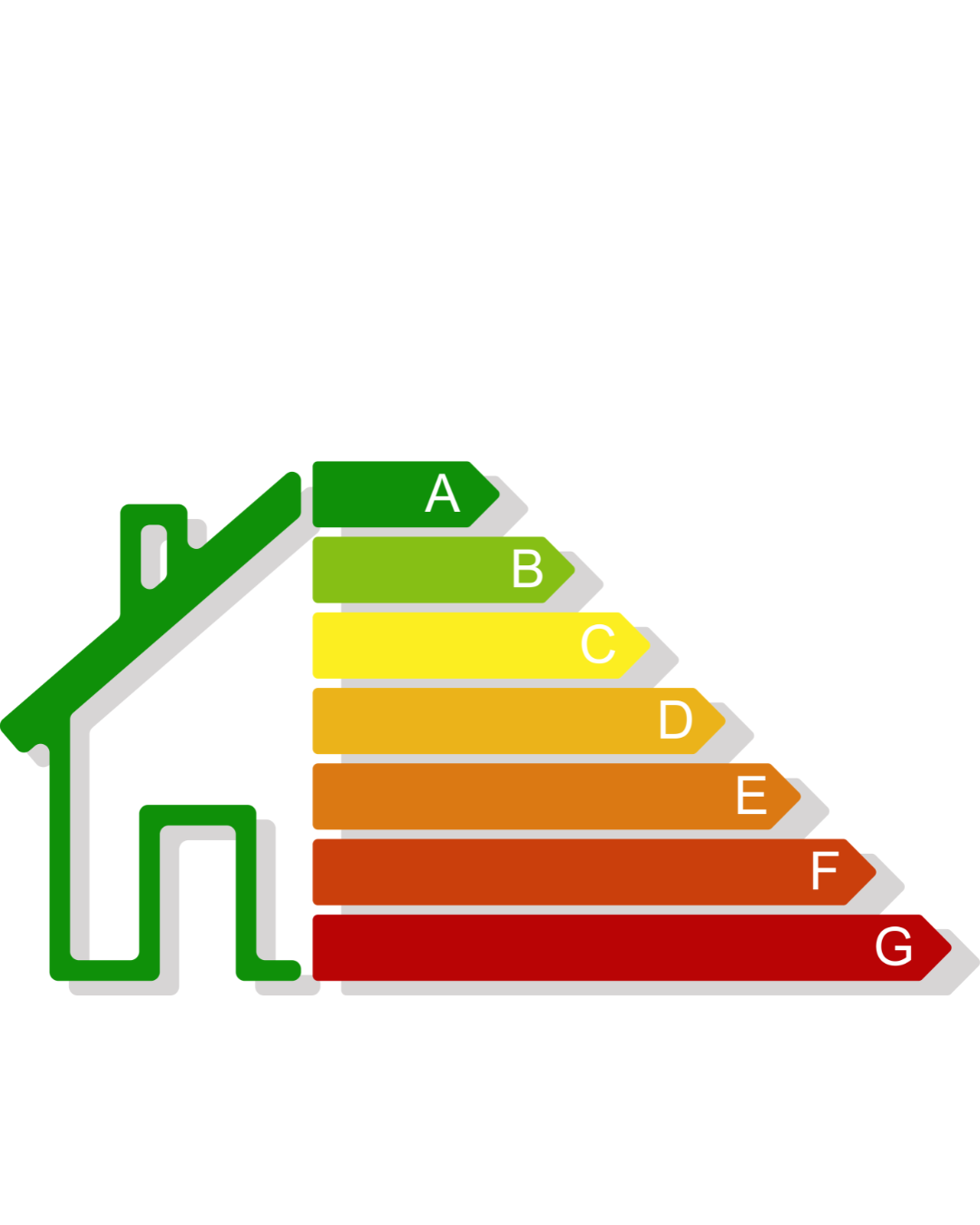
An Energy Performance Certificate (EPC) shows the energy efficiency of a property on a rating scale from A to G, with A representing the highest level of energy efficiency.
An EPC assessment considers features of the property that affect its energy performance, which can include:
• Heating systems
• Hot water
• Insulation
• Windows and glazing
• Lighting
• Building construction
• Ventilation and other relevant building features
The assessment produces an energy efficiency rating and includes recommendations for potential improvements.
An EPC is not a general building condition survey and does not assess wider property safety or compliance requirements such as fire safety, asbestos or damp and mould.
An EPC helps you understand how efficiently a building is likely to use energy and provides recommendations that may help improve its energy performance.
For property owners, landlords, facilities managers and organisations responsible for buildings, an up-to-date EPC can help you:
• Understand your property’s energy efficiency
• Identify potential energy-efficiency improvements
• Meet applicable EPC requirements
• Support property sales and lettings where an EPC is required
• Maintain accurate property records
• Plan energy-efficiency improvements across a portfolio
For organisations managing multiple buildings, having consistent and up-to-date EPC information can also make it easier to identify properties that may require further attention.
We provide EPC assessments across a wide range of properties and facilities, including residential properties, supported accommodation, offices, schools and educational facilities, retail and commercial premises, and larger property portfolios.
Our EPC assessments are carried out by qualified energy assessors and are completed in accordance with the applicable legislation, regulations and government requirements.
These include:
• Energy Performance of Buildings Regulations
• Minimum Energy Efficiency Standards (MEES)
• Decent Homes Standard
• Building Regulations – Part L

Whether you require an EPC on its own or alongside other compliance services, we’ll help coordinate the process through one trusted provider, making property compliance simpler to manage.
Our competent surveyors carry out EPCs across a wide range of commercial and residential properties, ensuring each survey is appropriate for the building and its intended use.
Based in Manchester with a particular focus on Greater Manchester and the wider North West. But our team supports clients across the UK, so wherever your properties are located, we’re ready to help.
Our compliance reports are written in plain English, with clear findings, practical recommendations and documentation that’s ready to use. No unnecessary jargon, just reports that help you act quickly and stay compliant.
From your first enquiry to your final report and beyond, we’re committed to clear communication, prompt responses and proactive recommendations and reminders to help you stay compliant without the stress.
We coordinate your compliance services in one place, reducing administration, saving time and making property compliance easier to manage, so you can focus on supporting your residents.
This is the second time we have used this company, and once again they have exceeded our expectations. This company offers every compliant service we need, which genuinely makes our day-to-day operations run more smoothly and gives us complete peace of mind.
Their customer service is outstanding. Every interaction—whether by phone or email—has been prompt, professional, and incredibly helpful. It’s clear that they value their clients and take pride in delivering reliable, efficient support.
They have become a trusted part of our process, and we will certainly continue using them in the future.

“We use The Compliance Company for all of our Supported Housing properties, and have been delighted with the service they provide.
They deal with all of our annual certificates to ensure we are always compliant, we are provided with a folder of all of our up to date certificates and have signed up to their monthly direct direct package so we can manage our cashflow better.
Great service for supported housing or care providers looking for a single point of accountability on their properties”
“Great service and report issued very quickly. As a landlord we would highly recommend to other landlords.“
We provide EPCs across the UK, supporting commercial, education, healthcare, hospitality, public sector and residential property, including social and supported accommodation in maintaining safe, compliant buildings.
Our surveyors regularly work across:
• Greater Manchester (Manchester, Salford, Bolton, Stockport, Oldham, Rochdale, Bury, Tameside, Trafford, Wigan)
• Merseyside (Liverpool, Wirral, St Helens, Southport, Knowsley, Sefton)
• Cheshire (Chester, Warrington, Crewe, Macclesfield, Northwich, Ellesmere Port, Wilmslow)
• Lancashire (Preston, Blackburn, Blackpool, Burnley, Accrington, Rossendale, Chorley, Lancaster)
• West Yorkshire (Leeds, Bradford, Wakefield, Huddersfield, Halifax, Dewsbury, Batley)
• South Yorkshire (Sheffield, Doncaster, Rotherham, Barnsley)
• North Yorkshire (York, Harrogate, Scarborough, Ripon, Selby, Skipton)
• East Midlands (Derby, Nottingham, Leicester, Derbyshire, Nottinghamshire, Leicestershire)
• Staffordshire (Stoke-on-Trent, Stafford, Tamworth, Newcastle-under-Lyme, Burton upon Trent)
• West Midlands (Birmingham, Coventry, Wolverhampton, Solihull, Walsall, Dudley, Sandwell)
• North East (Newcastle, Sunderland, Gateshead, Middlesbrough, Darlington, Durham)
• East Anglia (Cambridge, Norwich, Ipswich, Peterborough)
• Greater London (Central, North, South, East, West London)
• Kent (Maidstone, Canterbury, Medway, Ashford, Dartford, Tunbridge Wells)
• Surrey (Guildford, Woking, Reigate, Epsom, Redhill)
• Essex (Chelmsford, Colchester, Basildon, Southend-on-Sea, Harlow)
• South Coast (Hampshire, Sussex, Portsmouth, Southampton, Brighton, Eastbourne)
• South West (Bristol, Devon, Cornwall, Somerset, Gloucestershire, Plymouth, Exeter, Bath, Gloucester, Cheltenham, Taunton)
• South Wales (Cardiff, Newport, Swansea, Bridgend, Merthyr Tydfil)
• Scotland (Glasgow, Edinburgh, Aberdeen, Dundee, Stirling, Perth)
Whether you need an EPC depends on the type, use and circumstances of the property.
EPCs are generally required when a building is constructed, sold or rented out, subject to specific exemptions. Different requirements can apply to domestic and non-domestic properties.
If you’re unsure whether your property requires an EPC, we can help you identify the appropriate assessment.
An EPC is generally valid for 10 years, unless it is replaced by a newer EPC for the same property.
An EPC rates a property’s energy efficiency from A to G, with A representing the highest level of energy efficiency.
The certificate also provides recommendations for potential improvements that could improve the property’s energy performance.
What you need to do depends on the type of property and the energy-efficiency requirements that apply.
For properties covered by the private rented sector MEES rules, an EPC rating below E generally means the property cannot legally be let unless the relevant requirements have been met or a valid exemption applies.
Different requirements apply to social housing, with the new social rented sector standard requiring applicable homes in England to achieve EPC C or equivalent against reformed metrics by 2030, subject to valid exemptions.
Know more about EPCs in Supported Housing
Yes. We can coordinate EPC assessments for individual properties as well as larger property and facilities portfolios.
We work across residential properties, supported accommodation, offices, schools, retail and commercial premises, providing consistent certification and one point of contact.
Potentially. EPC requirements apply to many non-domestic buildings when they are constructed, sold or rented out, although exemptions and specific requirements can apply.
For certain larger commercial buildings frequently visited by the public, there can also be requirements to display an EPC where an EPC has previously been produced for the building.
If you’re unsure whether your building requires an EPC, we can help you establish what assessment is appropriate.
Yes, potentially. An EPC and Fire Risk Assessment assess completely different aspects of a building.
An EPC assesses energy performance, while a Fire Risk Assessment considers fire hazards, risks and the measures required to protect people using the building.
We regularly help organisations manage both as part of their wider property compliance requirements, providing one point of contact for the inspections their buildings need
Potentially. An EPC and Damp Survey assess different aspects of a property, although there can be a relationship between energy performance, heating, insulation, ventilation and condensation.
An EPC does not diagnose damp or identify its cause, while a Damp Survey investigates moisture-related issues and their likely causes.
We regularly help organisations manage both as part of their wider property compliance requirements.
Our Energy Performance Certificates (EPCs) start from £79.
Our indicative pricing is:
All prices are exclusive of VAT. Prices may vary depending on your location, property size, layout and assessment requirements. Volume discounts may also be available.
Stagnant water, infrequently used outlets and poorly maintained systems are all it takes for Legionella risk to build up. Under the Health and Safety at Work Act 1974 and COSHH Regulations, managing that risk is your legal responsibility.
We assess your setup, tell you exactly what needs addressing and give you the documentation to prove you’re on top of it.
Under the Regulatory Reform (Fire Safety) Order 2005, the responsible person for any non-domestic premises must ensure a suitable and sufficient fire risk assessment is in place.
We carry out the full assessment, document the findings clearly and give you a prioritised action plan.
Any building constructed before 2000 is likely to contain asbestos. Under the Control of Asbestos Regulations 2012, you need a survey before any refurbishment or demolition work starts.
We carry out asbestos management and refurbishment surveys, identify any asbestos-containing materials and give you a clear, legally compliant record.
Emergency lighting helps people safely find their way out if normal lighting fails during a fire or power cut. Under the Regulatory Reform (Fire Safety) Order 2005, fire safety measures such as emergency lighting must be maintained in efficient working order and good repair.
We inspect, test and maintain your emergency lighting system, identify faults and provide clear records to help you meet your fire safety responsibilities.
Damaged or poorly maintained electrical equipment can create a risk of electric shock, fire and electrical faults. Under the Electricity at Work Regulations 1989, electrical equipment must be maintained, so far as reasonably practicable, to prevent danger.
We inspect and test portable electrical equipment where appropriate, identify unsafe appliances and provide clear records to help you manage your electrical safety responsibilities.
Damp and mould can quickly become bigger property problems, affecting both the building and the people using it. Under the Housing Act 2004 and Housing Health and Safety Rating System (HHSRS), landlords and property owners have responsibilities to identify and address these risks.
We carry out non-intrusive damp assessments, identify potential causes and areas requiring further investigation, and give you a clear record of our findings with practical recommendations.
A fire alarm that isn’t properly maintained may fail when you need it most. Under the Regulatory Reform (Fire Safety) Order 2005, relevant fire safety measures must be maintained in an efficient state, in efficient working order and in good repair.
We inspect, test and maintain your fire alarm system, identify faults and give you clear records and certification to support your fire safety responsibilities.
Damaged, poorly maintained or altered fire doors may not perform as intended in a fire. Under the Regulatory Reform (Fire Safety) Order 2005, fire safety measures must be appropriately maintained, with additional fire door checking requirements applying to certain residential buildings under the Fire Safety (England) Regulations 2022.
We inspect your fire doors and associated components, identify defects and provide clear photographic evidence and practical recommendations for any remedial work required.
Unsafe gas appliances, fittings and flues can put occupants at risk of fire, explosion and carbon monoxide poisoning. Under the Gas Safety (Installation and Use) Regulations 1998, landlords must ensure gas appliances, fittings and flues provided for tenants are safe and arrange annual gas safety checks by a Gas Safe registered engineer.
We carry out gas safety checks, identify faults and safety concerns, and provide the required documentation to help you meet your legal responsibilities.
Make compliance part of the build from day one. We provide design and build-stage services including SAP Assessments, Part L compliance, Air Tightness Testing, Sound Testing and Site Inspections.
Our clear reporting and practical technical support help you identify issues early, meet Building Regulations requirements and keep your project moving.
Compliance in supported housing is a different beast.
It has stricter frameworks, sector-specific requirements and a very different set of responsibilities.
We have a specialist division built entirely for it. Same one-stop-shop approach, built specifically for housing providers, care organisations and nominated individuals managing property compliance.